Foundations and Slabs That Support Structural Loads
Residential Concrete in the Tri-Cities for driveways, foundations, and slabs requiring proper site preparation
Concrete work begins with site grading that establishes positive drainage away from structures, preventing water from pooling against foundations or undermining driveway edges during freeze-thaw cycles. RCP Construction pours driveways, foundations, slabs, and structural concrete for both new construction and property upgrades throughout the Tri-Cities, emphasizing durability through correct mix design and curing procedures. Properties on sloped terrain require excavation to reach stable soil before placing gravel base and reinforcement, and inconsistent compaction leads to cracking within the first year as substrate settles unevenly beneath the cured slab.
The process involves removing topsoil to expose load-bearing strata, installing compacted gravel base in lifts to prevent voids, and placing rebar or wire mesh before the pour to control crack propagation. Precision in forming and finishing determines whether surfaces drain correctly and edges remain intact under vehicle loads or structural weight.
Request a site evaluation to assess grading needs and discuss project specifications.
What Changes After Concrete Cures Properly
Proper site prep means excavating to depth where soil compacts without bouncing underfoot, spreading four to six inches of crushed stone base, and compacting in two-inch layers using a plate tamper or roller. Forms must sit level and braced against concrete pressure during the pour, with control joints cut at intervals that manage shrinkage cracking as the slab cures over several days.
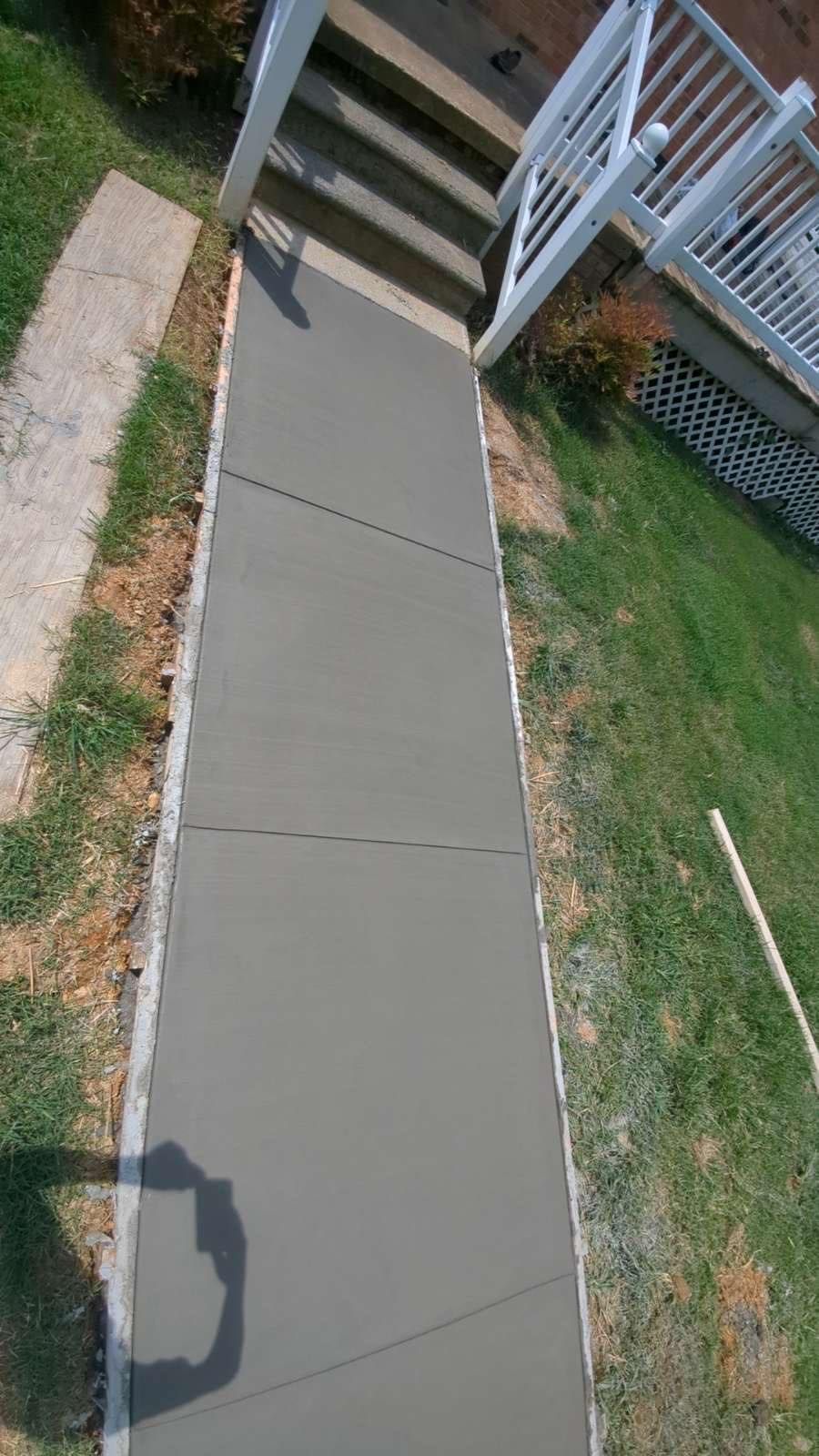
You notice finished driveways slope away from garage doors at a quarter-inch per foot, preventing water from entering during rainstorms, and foundation walls sit plumb without bowing or cracking where backfill pressure loads the exterior face. Slabs remain flat across the surface without depressions where water collects, and edges hold their profile without spalling when vehicles turn or heavy equipment crosses the transition.
Structural integrity depends on achieving specified compressive strength, which requires maintaining moisture during the curing period and protecting surfaces from temperature extremes. The work includes coordinating concrete delivery timing, finishing surfaces before initial set begins, and applying curing compound or covering with plastic to retain moisture for at least seven days.
What Homeowners Ask About Concrete Projects
Property owners planning concrete work in Chuckey and surrounding areas typically want details about preparation steps, timing considerations, and long-term performance expectations.
How does grading affect concrete longevity?
Proper grading directs surface water away from slabs and foundations, preventing saturation of base material that leads to settlement cracks and edge failure as freeze-thaw cycles expand trapped moisture.
What base material works best under driveways in this region?
Crushed limestone or gravel with angular edges compacts tightly and resists shifting better than rounded stone, providing stable support that distributes vehicle loads without creating soft spots beneath the concrete.
When can I drive on a new concrete driveway?
Concrete reaches sufficient strength for light vehicle traffic after seven days in moderate weather, but full curing takes 28 days, with heavy loads or sharp turns best avoided during that period to prevent surface damage.
Why do some driveways crack while others stay intact?
Cracking results from inadequate base preparation, missing control joints that guide crack location, or pouring concrete too thin for the load it carries, with proper reinforcement controlling crack width when shrinkage occurs.
What's included in foundation concrete work for new builds?
Foundation pours include footings below frost depth, vertical walls formed to engineered height, anchor bolts for sill plate attachment, and drainage tile installation around the perimeter before backfilling.
RCP Construction plans concrete projects around weather conditions and site-specific requirements, managing all phases from excavation through finishing to maintain quality and structural performance. Contact us to discuss your concrete needs and schedule an on-site estimate.